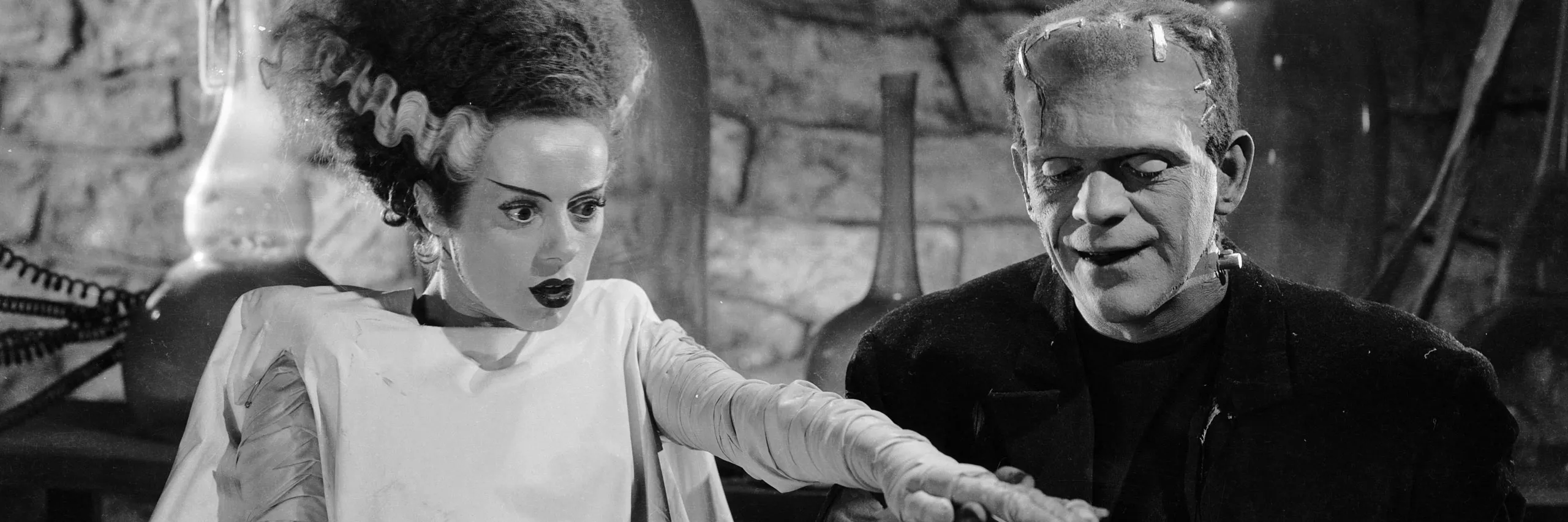
 Bride of Frankenstein (1935)
Body & Contagion
Horror expressed through the flesh. Transformation, mutation, contagion, and violation — the body as a site of terror, where the boundary between self and other is breached from within.
History & Origins
Body and contagion horror makes the flesh itself the battleground. Where monsters threaten from outside and supernatural forces operate beyond natural law, this tradition locates horror within the body. The skin is breached, the cells are rewritten, the organism is colonised. There is no distance between you and the thing that is destroying you, because the thing that is destroying you is you.
The category spans an extraordinary range of anxieties, splitting into five overlapping but distinct subgenres. Body horror, the tradition most associated with David Cronenberg, explores transformation and mutation — the body developing new, unwanted capabilities or losing the ones it depends on. Virus / pandemic horror taps into the collective dread of contagion, the knowledge that invisible organisms can bring civilisation to its knees. Parasite horror confronts us with organisms that colonise from within, erasing the boundary between host and invader. Mad science horror examines what happens when human intelligence is applied to the body without moral constraint — the experiment that treats flesh as raw material. Splatter, founded by Herschell Gordon Lewis and refined by Italy's masters of gore, approaches the body from the opposite direction — not transformation from within, but mechanical violation from without; not the cellular dread of contagion, but the spectacle of the breach itself.
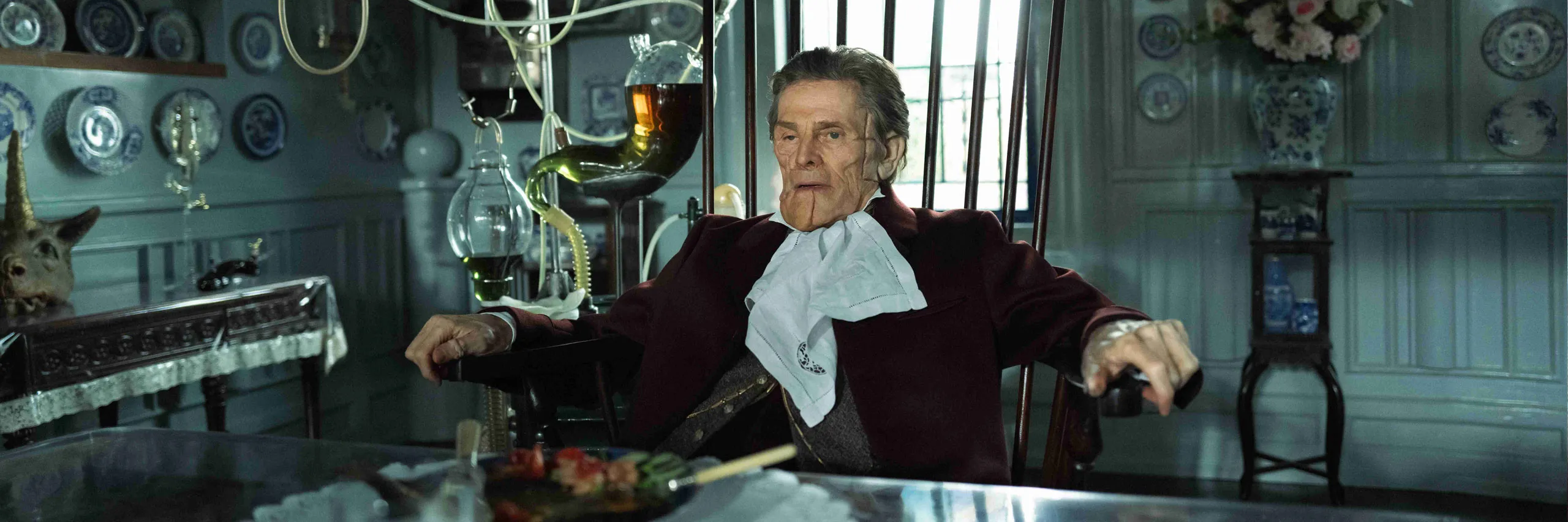
The tradition's foundational text is Mary Shelley's Frankenstein (1818), what Peter Hutchings identifies as "the only novel from the original gothic period in literary history to have been adapted repeatedly for stage, screen, radio, and television and still to retain a significant hold on our imagination." James Whale's Frankenstein (1931), with Boris Karloff, established the cinematic blueprint for the mad-scientist register. The form's contemporary identity, however, was forged by Cronenberg — History of Horror, Fear and the Uncanny (2026) credits him with "key contributions to the body horror genre with what has been dubbed 'visceral cinema.'" From Shivers (1975) through Rabid (1977), The Brood (1979), Videodrome (1983), and The Fly (1986), Cronenberg's films "captured flesh and sinew in grisly detail," establishing a register every subsequent body-horror filmmaker has either followed or reacted against. Kim Newman quotes the director directly on his own thesis: "I can imagine what it feels like to be a virus... See the movies from the point of view of the disease."
The splatter form began in Florida in 1963. Herschell Gordon Lewis's Blood Feast (1963), made for sixty thousand dollars and packing Southern drive-ins with the forced extraction of a victim's tongue, was what Caelum Vatnsdal calls in They Came From Within (2004) "a little splatter classic" — the founding text of a form Scott Aaron Stine in The Gorehound's Guide to Splatter Films of the 1960s and 1970s defines as motion pictures "which contain scenes of extreme violence in graphic and grisly detail" with "blood-drenched special effects, often at the expense of minor technicalities like, well, everything else." Lewis followed his own template with Two Thousand Maniacs! (1964), Color Me Blood Red (1965), and The Gore Gore Girls (1972). The form crossed the Atlantic and was inherited by Italy's gore masters — Lucio Fulci's Zombie Flesh Eaters (1979), City of the Living Dead (1980), and The Beyond (1981), all blacklisted on Britain's "video nasty" list in 1984. By the 1980s a comedic register had opened beside the straight one: Sam Raimi's The Evil Dead (1981) and Evil Dead II (1987) — what Bruce Hallenbeck in Comedy-Horror Films (2009) calls "splatstick," inspired "as much by the Three Stooges as by H. P. Lovecraft" — and Peter Jackson's Bad Taste (1987) and Braindead (1992) pushed dismemberment so far past the threshold of seriousness that it loops back into joy.
The other four subgenres developed in parallel through the late twentieth century. John Carpenter's The Thing (1982), with Rob Bottin's transformative makeup effects, fused parasite-horror with body-horror in the canonical Antarctic isolation chamber piece. Ridley Scott's Alien (1979) gave parasite-horror its foundational chestburster imagery. Brian Yuzna's Society (1989), with its closing "shunting" sequence, ran the form to one of its most memorable practical-effects finales. Shinya Tsukamoto's Tetsuo: The Iron Man (1989) brought the form into Japanese cyberpunk register, "fusing flesh and metal in an industrial, experimental style." Stuart Gordon's Re-Animator (1985) adapted Lovecraft for the mad-science variant. Danny Boyle's 28 Days Later (2002) reset the virus-horror cycle for the post-millennium; Steven Soderbergh's Contagion (2011) ran the procedural-pandemic variant in clinical-realist register.
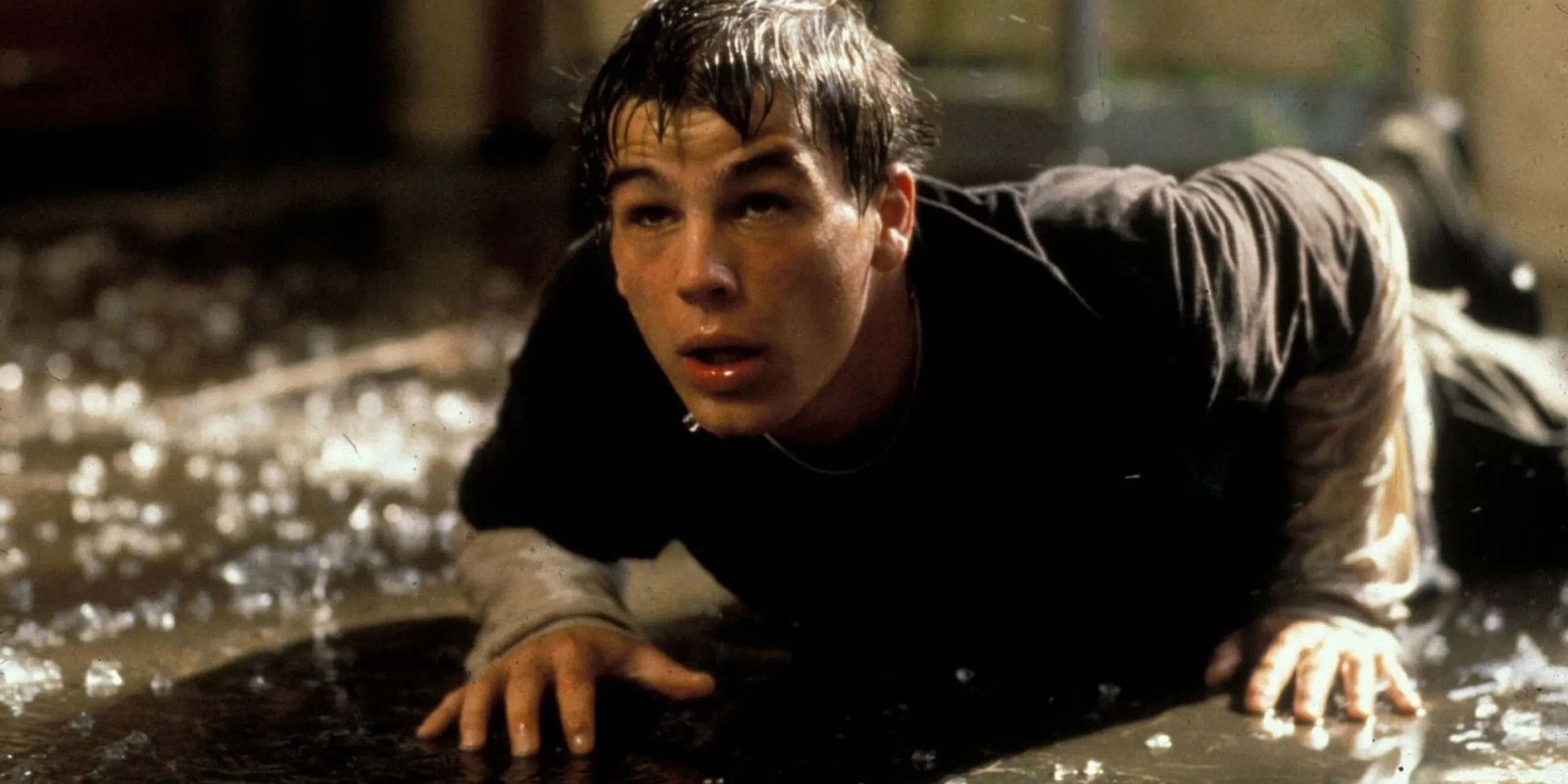
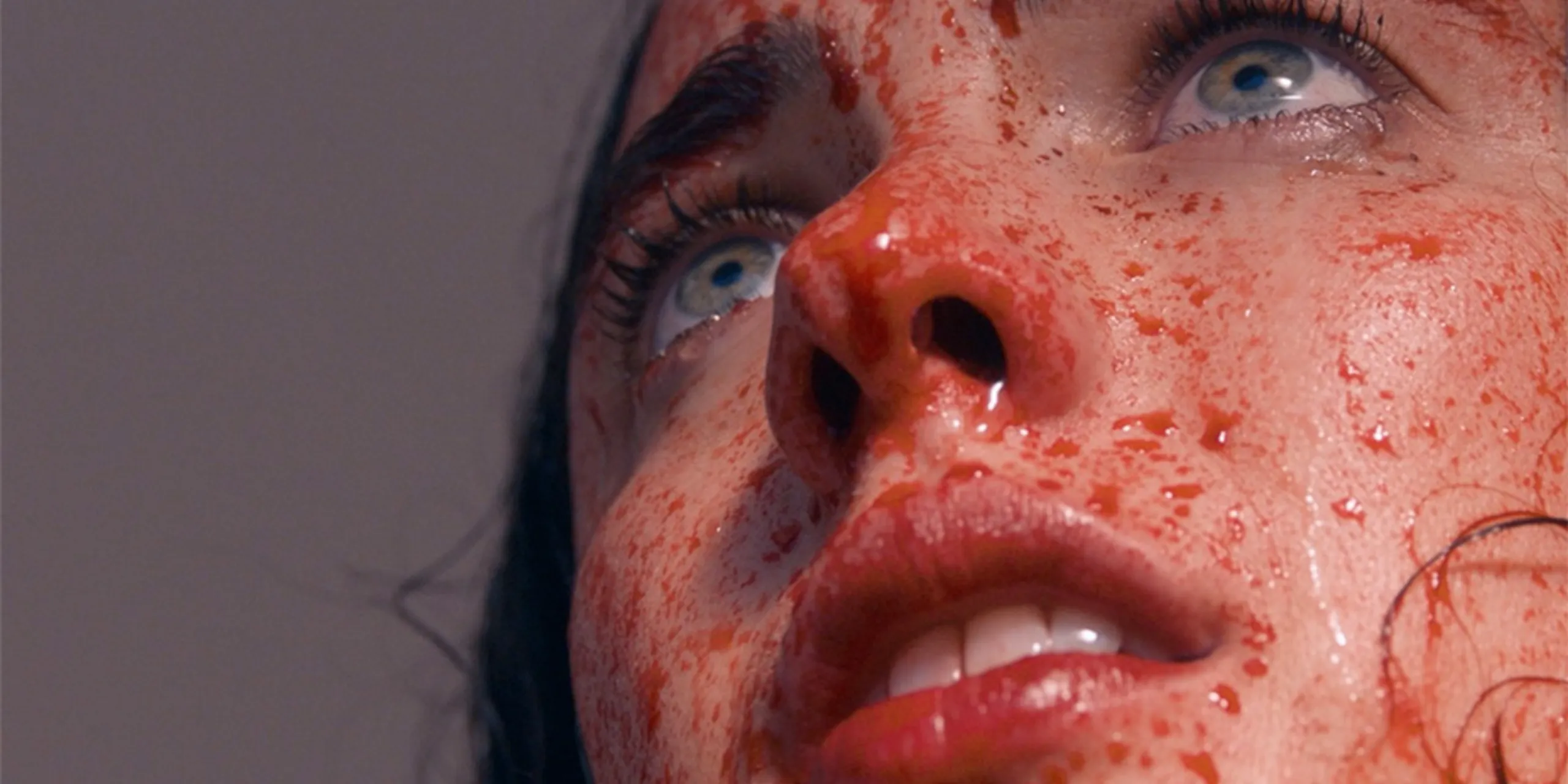
What unites these subgenres is a violation of bodily integrity so fundamental that it attacks the audience's sense of their own physical safety. Body horror works from within — transformation, mutation, the slow betrayal of the host. Contagion and parasite horror work at the cellular and microbial level — invasion at scales too small to see. Mad science makes the violation deliberate, the experiment as cause. Splatter works from the opposite pole — the mechanical breach, the external impact, the spectacle of the body opened up. You watch a body horror film and you feel it in your own body — the sympathetic flinch, the protective crossing of arms, the involuntary check that your own skin is still intact. This visceral identification is the genre's power and its purpose. The 2010s and 2020s have brought the form back to commercial peak with films like Alex Garland's Annihilation (2018), Julia Ducournau's Palme d'Or-winning Titane (2021), and Coralie Fargeat's Oscar-nominated The Substance (2024). Body and contagion horror reminds us that we are biological organisms, vulnerable to biological threats, and that the elaborate systems we have built to protect ourselves — medicine, hygiene, quarantine — are thinner barriers than we would like to believe.
Explore Body & Contagion
Statistics
Popularity by Decade
Share of each decade's horror films classified as Body & Contagion. Counts films with at least 5 TMDB ratings, so very obscure titles are not represented.
Popularity by Country
Share of each country's horror output classified as Body & Contagion. Counts films with at least 5 TMDB ratings, so very obscure titles are not represented.